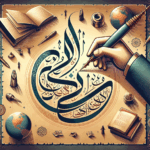
The Arabic Alphabet and Its Influence on World Literature
Have you ever wondered how a script can shape the way we think, communicate, and even influence global cultures? The Arabic alphabet is more than just a collection of letters; it’s a bridge that has connected civilizations for centuries. Let’s dive into the fascinating journey of the Arabic script and explore its profound impact on world literature. 📚✨
Table of Contents
1. Introduction to the Arabic Alphabet
2. Historical Journey of the Arabic Script
3. The Arabic Alphabet’s Role in Preserving Knowledge
4. Influence on World Literature
5. Conclusion
6. FAQs
Introduction to the Arabic Alphabet
The Arabic alphabet, with its beautiful cursive script, consists of 28 letters and is written from right to left. It’s the backbone of the Arabic language, spoken by over 420 million people worldwide. But the influence of this elegant script extends far beyond its native speakers, enriching global literature in unexpected ways.
Historical Journey of the Arabic Script
The Arabic script has a rich history, dating back to the 4th century CE. Originating from the Nabataean alphabet, it evolved over time, becoming the distinct script we recognize today. It spread rapidly with the rise of Islam, reaching the Middle East, Africa, and even parts of Europe and Asia.
This widespread adoption wasn’t just about communication; it was about preserving and transmitting knowledge across cultures. The script became a vehicle for scientific, philosophical, and literary works, many of which continue to influence modern thought.
The Arabic Alphabet’s Role in Preserving Knowledge
During the Islamic Golden Age, scholars in the Arab world were at the forefront of scientific discovery and intellectual advancement. The Arabic script played a crucial role in this era. Major works in mathematics, astronomy, medicine, and philosophy were written in Arabic, making the script an essential tool for learning and scholarship.
Think of pivotal figures like Al-Khwarizmi, whose work in mathematics laid the foundation for algebra, or Avicenna, whose contributions to medicine were studied for centuries. These scholars wrote in Arabic, and their works were later translated into Latin and other languages, bridging knowledge between East and West.
Influence on World Literature
The Arabic alphabet has had a significant impact on world literature. Many classic works, such as „One Thousand and One Nights,“ have captivated audiences globally, introducing them to the richness of Arabic storytelling. These tales have inspired countless adaptations, permeating cultures and languages worldwide.
Moreover, the translation movement in medieval Spain, where texts were translated from Arabic into Latin, helped disseminate knowledge across Europe, influencing the Renaissance and beyond. The script was not just a medium for storytelling but a conduit for the exchange of ideas and philosophies.
Conclusion
The Arabic alphabet is more than an ancient script; it’s a symbol of cultural exchange and intellectual achievement. Its influence on world literature is a testament to its power to transcend borders and inspire generations. Whether through scientific texts, philosophical treatises, or enchanting stories, the Arabic script continues to enrich our global literary heritage.
FAQs
Why is the Arabic alphabet important in literature?
The Arabic alphabet is crucial in literature because it has been a medium for preserving and sharing knowledge across cultures. Its influence extends to scientific, philosophical, and fictional works that have shaped world literature.
How did the Arabic script influence European literature?
The Arabic script influenced European literature through the translation movement, where Arabic texts were translated into Latin, spreading knowledge that fueled the European Renaissance.
What are some famous works written in Arabic?
Famous works include „One Thousand and One Nights,“ „The Muqaddimah“ by Ibn Khaldun, and „The Book of Healing“ by Avicenna, each contributing significantly to literature and science.
Is the Arabic script used in other languages?
Yes! The Arabic script is used in several other languages, such as Persian, Urdu, and Kurdish, showcasing its versatility and widespread influence.
Can learning the Arabic alphabet benefit literature enthusiasts?
Absolutely! Understanding the Arabic alphabet can provide deeper insights into classical texts and enhance appreciation of global literary traditions.